 Koss Pest Control IncKoss Pest Control Inc
We find how they got in.
Pest Control Service Pottstown homeowners call for almost always starts with one sighting — a mouse behind the stove in a West End row home, ants streaming under a Rosedale baseboard, or a paper wasp nest over the front step in Sanatoga. Typing "pest control near me" at 11 p.m. is how most of our calls begin, and the fix is rarely another can of spray. Our work starts with a walk-through and a diagnosis: what the pest is, how it got in, and what happens next.
Call (610) 546-0561
Text or call about your pest control service job — a quick photo helps us quote fast.
A firm, all-in price confirmed before we start — no surprises.
On time, done to standard, and tidy when we leave.
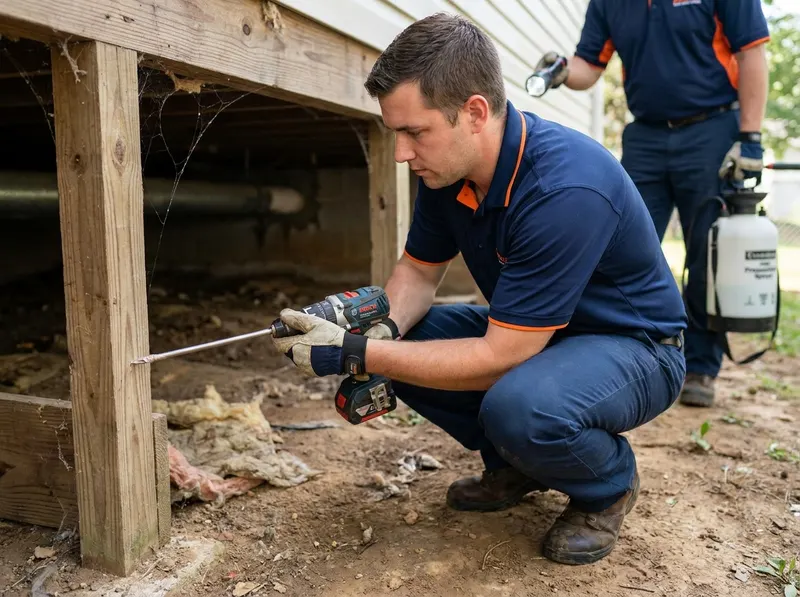
Eastern subterranean termites are the wood-destroying insect that matters most around Pottstown, and they show themselves as mud tubes on foundation walls, hollow-sounding trim, or a swarm of dark winged insects at a basement window in March, April or May. We inspect the sill plate, band joist, crawlspace and any wood in contact with soil, then treat with either a perimeter liquid barrier or a monitored bait system depending on how your foundation is built. Older stone-foundation basements in the East End and along the High Street corridor matter here because stone-and-mortar walls give termites dozens of vertical routes a poured wall does not. You get photos of every tube, damaged joist and moisture source we find, and a plain explanation of which areas are active versus old.
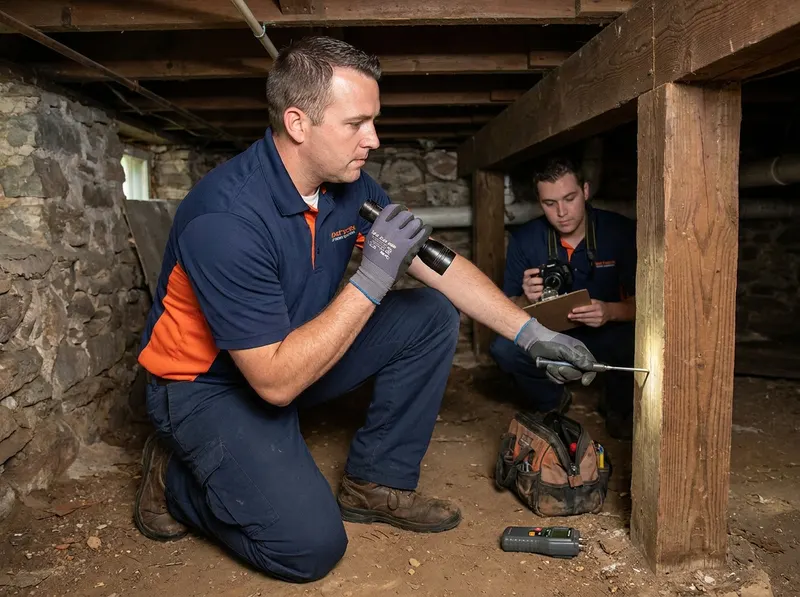
A WDI inspection is the termite report a lender or buyer asks for before a Pottstown property changes hands, and it documents active infestation, prior damage and conditions conducive to infestation. We walk the exterior grade, basement or crawlspace, garage, attached porches and any accessible attic, then note the findings on the standard report form. This matters when you are on a closing clock: spring closings in Pottstown land in the same March-through-May window as termite swarm season, so scheduling early keeps the report from becoming the reason the settlement date moves. Inspection-only visits are priced separately from treatment, and we will tell you if nothing needs treating.
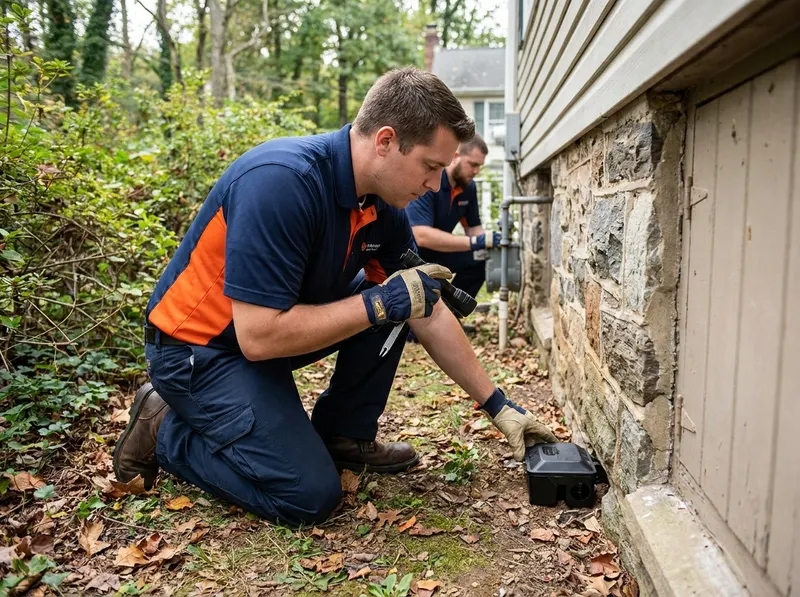
House mice are the number-one winter call in Pottstown, and they arrive through gaps you would not think twice about — the corner of a garage door seal, an unsealed dryer vent, a gas line penetration, a rotted porch board. Our first visit combines trapping in the active areas with a baited exterior perimeter and a written list of the openings we found, each one photographed. Mice breed fast enough that a two-week delay changes the size of the job, which is why interior trapping goes in on day one rather than after a follow-up. Row homes and twins in the West End and South Pottstown often share a party wall, so we check the shared side and the basement ceiling joist bays as a matter of routine.
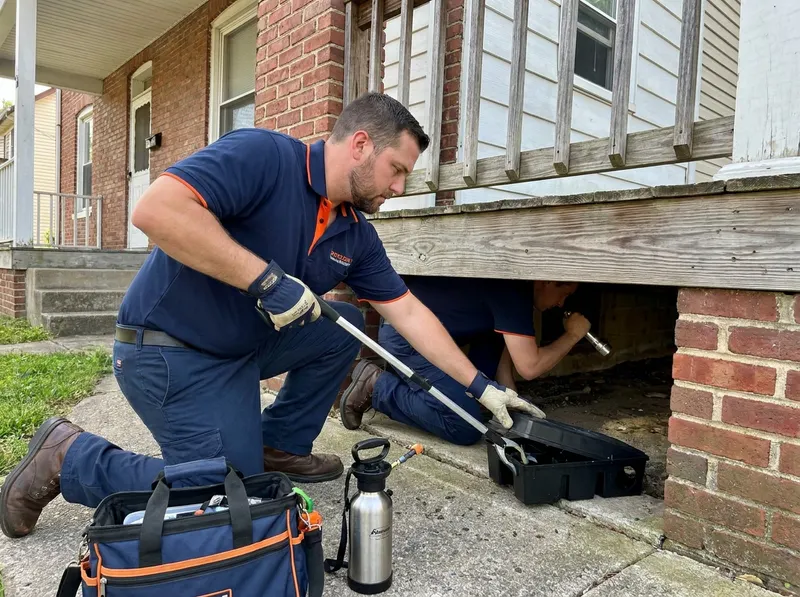
Norway rats concentrate near older sewer laterals, alley trash areas, creek banks and commercial dumpsters, and they need a heavier approach than mice — larger traps, tamper-resistant exterior stations, and burrow work along foundations and under sheds and decks. We look for the tell-tale signs first: greasy rub marks, half-inch droppings, burrow holes with a smooth run, and gnawing on wood or plastic at ground level. Rat jobs are multi-visit by nature and usually run two to four service calls over several weeks, because you are working down a population, not clearing a single animal. Sanitation and harborage get the same attention as the traps, since a woodpile or a leaking dumpster undoes good trapping.
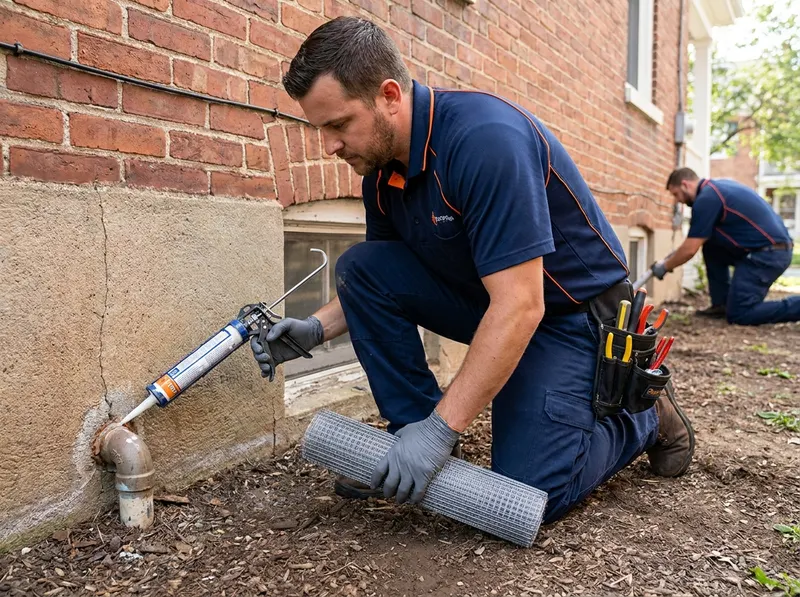
Exclusion is the physical work of closing the openings rodents actually use: sealing sill plate gaps, screening crawl and foundation vents, fitting door sweeps, packing utility penetrations, closing corner gaps in garage door tracks, and screening or capping vent terminations. This is the part most spray-only companies skip, and it is the difference between a clear winter and a repeat call in February. Pottstown's older housing stock — stone foundations, additions built onto additions, brick-over-frame walls, unsealed basement window wells — usually has several small openings rather than one obvious hole. Pricing tracks the number and difficulty of openings rather than the square footage of the house, and we photograph each one before and after.
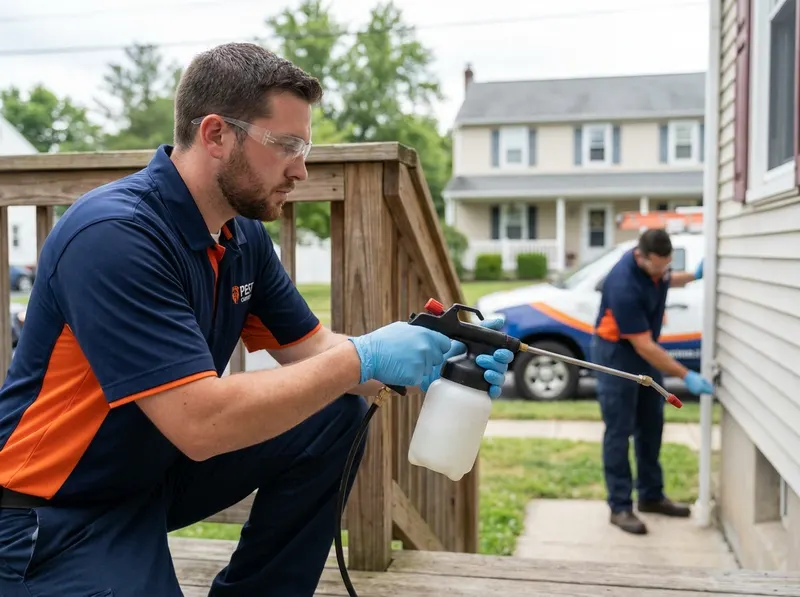
Carpenter ants are the large black ants that show up indoors in spring, and they signal moisture as much as they signal an ant problem: a leaking gutter seam, a failed window sill, a porch column sitting in wet soil, a slow shower pan drip. We locate the nest and the satellite nests rather than just treating the trail, then treat voids and the exterior perimeter and tell you which piece of wood needs a carpenter's attention. Coarse sawdust-like shavings under a window or beam is the clearest sign we look for. Shaded, mature-tree properties near The Hill School campus and along the older residential streets tend to hold more moisture at grade, which is exactly what carpenter ants want.
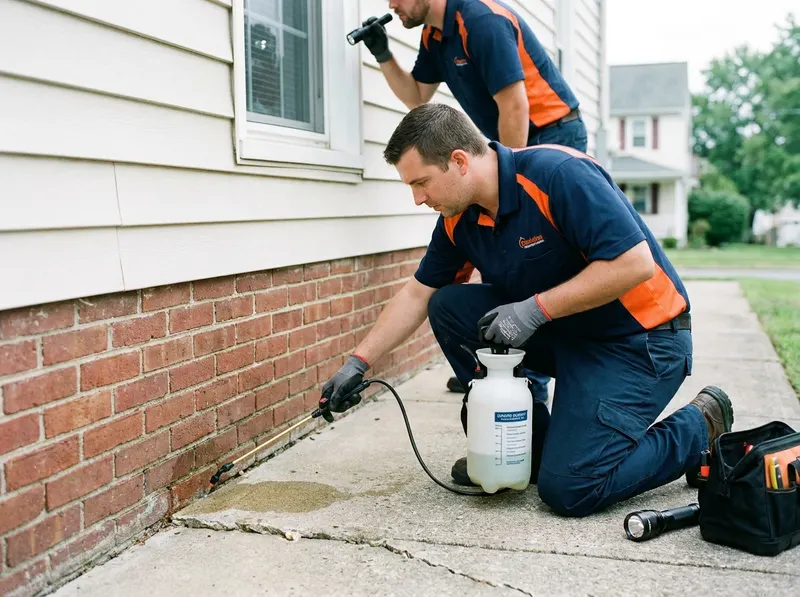
Odorous house ants are the small dark ants that trail across a kitchen counter or under a baseboard by the hundreds and give off a faint coconut smell when crushed. They peak April through June in Pottstown after wet spring stretches, particularly along the Manatawny and Schuylkill floodplains, and they respond to a baiting-and-perimeter approach rather than a contact spray that scatters the colony into new satellites. We follow the trail to its entry point — a slab crack, a plumbing chase, a foundation weep, a mulch bed pushed against siding — and treat there as well as inside. Booking one to two weeks ahead is realistic in May, which is the busiest ant stretch of the year.
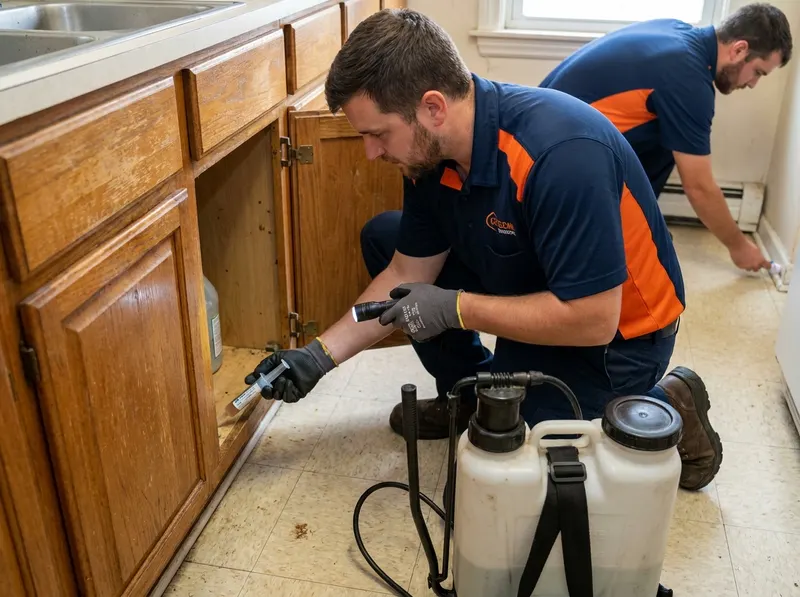
Cockroach work in Pottstown splits into two very different jobs: occasional large roaches wandering in from a drain, crawlspace or sewer line, and an established German cockroach population living in a kitchen or bathroom. The first is often one visit with drain and void treatment; the second is a two- to four-visit protocol using gel bait, void treatment and monitors, because egg cases hatch after the initial service. We inspect motor housings, hinge voids, under-sink cabinets, dishwasher panels and the backs of appliances, since that is where they actually live rather than where you see them. Apartments and multi-unit buildings need the adjoining units checked, or the population simply moves next door and returns.
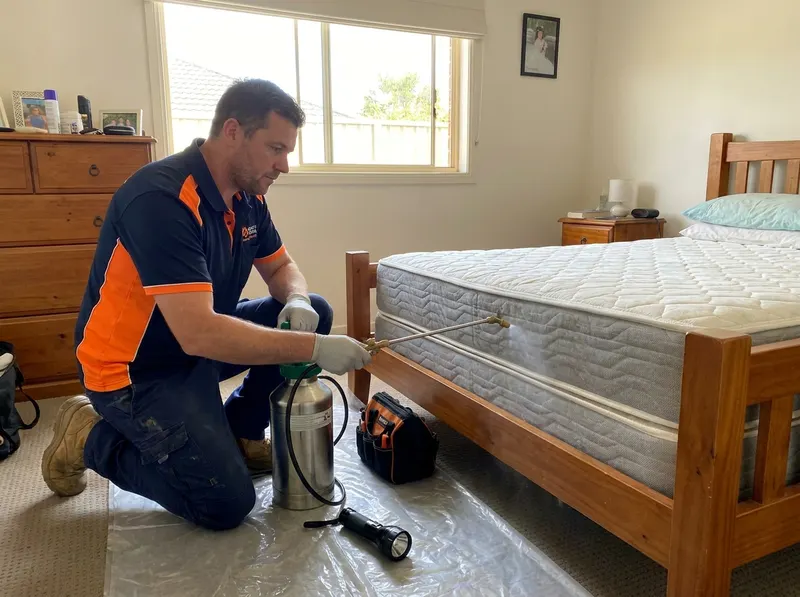
Bed bug treatment starts with confirmation — live insects, shed skins, dark spotting on seams and box spring corners — because dozens of things get mistaken for bed bugs and nobody should pay for a treatment they do not need. Confirmed activity in one bedroom is handled with a targeted multi-visit protocol; activity that has reached a sofa or a second bedroom needs a whole-unit approach with written prep instructions on laundry, clutter and bagging. Follow-up visits are part of the job, not an upsell, since eggs surviving the first service are the usual reason a treatment appears to fail. Landlords and tenants both get the same written findings and photos, which keeps a difficult conversation factual.
If you have one visible, contained problem — a nest above a door, ants on a single counter, a mouse caught in the pantry — a single targeted visit is the right choice, and it typically lands at or just above the $250 minimum. If the same pest has come back twice after hardware-store bait and sprays, choose the diagnosis-and-exclusion route instead: we spend the extra time finding the gap under the siding, the unsealed sill plate, the dryer vent with no damper, or the leaking trap arm feeding the colony. The trade-off is plain — exclusion costs more up front and takes longer on site, but spraying a trail without closing the entry point buys you three weeks, not a season. For termites, there are two honest paths. If you want the most predictable protection around an older Pottstown foundation, a liquid soil barrier applied around the perimeter is the workhorse choice and is usually the fastest to stop active feeding. If your structure has finished basement walls, hardscape, or a slab that makes trenching disruptive, a monitored bait system fits better because it works colony-by-colony over months. The trade-off is speed versus disturbance: barrier work is quicker to results, bait work is gentler on your basement and landscaping but asks you to be patient. A liquid barrier around an average Pottstown twin or single runs roughly $1,200 to $2,800 in one visit; a bait system runs roughly $1,200 to $2,200 for the first year and includes return trips to read the stations. Rodents split the same way. If a mouse turned up once in October and the basement is dry and tidy, trapping and a baited perimeter usually settles it inside two or three weeks for $250 to $450. If you are hearing activity in the wall void, finding droppings in more than one room, or living in a row home that shares a party wall, choose exclusion: garage door corners, utility penetrations, sill gaps, unscreened crawl vents and the space behind porch skirting are where mice actually enter. The trade-off is cost against permanence — trapping clears the animals that are already inside, sealing decides whether new ones follow them. <strong>Do I need a recurring plan, or can I get one visit?</strong> One visit is available for most single-pest problems, and you are not required to buy a year of service to get the first appointment. Recurring quarterly visits genuinely fit two situations: rentals and food-service kitchens where reintroduction is constant, and homes backing onto the Manatawny or Schuylkill corridors where mosquitoes, ticks and mice pressure the structure every season. If your problem is a one-off nest, a plan is overkill, and we will say so on site rather than upsell you. <strong>My tenant is threatening to withhold rent — what fits?</strong> Landlords with a documented complaint usually want the inspection report and photos as much as the treatment, so ask for the written findings when you book. If the unit is one of several in a converted High Street building, treating one apartment alone rarely holds; adjoining units share wall voids, plumbing chases and drop ceilings, and a building-wide approach is the version that actually works. For bed bugs, the decision is room count and honesty about clutter. If activity is confined to one bedroom, a targeted multi-visit protocol is the efficient choice at roughly $600 to $1,200. If activity has spread to a couch and a second bedroom, expect a whole-unit approach at roughly $1,200 to $2,500 with prep instructions — the trade-off is more preparation work on your end in exchange for not paying twice. Cockroaches follow the same logic: a single kitchen with occasional sightings is a one-visit job, while an established German cockroach population in a rental or restaurant needs a two- to four-visit protocol because you are treating egg cases that hatch after the first service. <strong>Should I treat the yard or the house?</strong> Treat the house when the pest is nesting inside or entering it — mice, ants, roaches, termites. Treat the yard when the pest lives outdoors and finds you there — mosquitoes, ticks, lanternflies. Properties near Memorial Park or the Schuylkill River Trail often need both, because shaded creek-side vegetation keeps the exterior pressure high all summer.
| Service call | Upfront quote |
Your exact price is confirmed before any work begins.